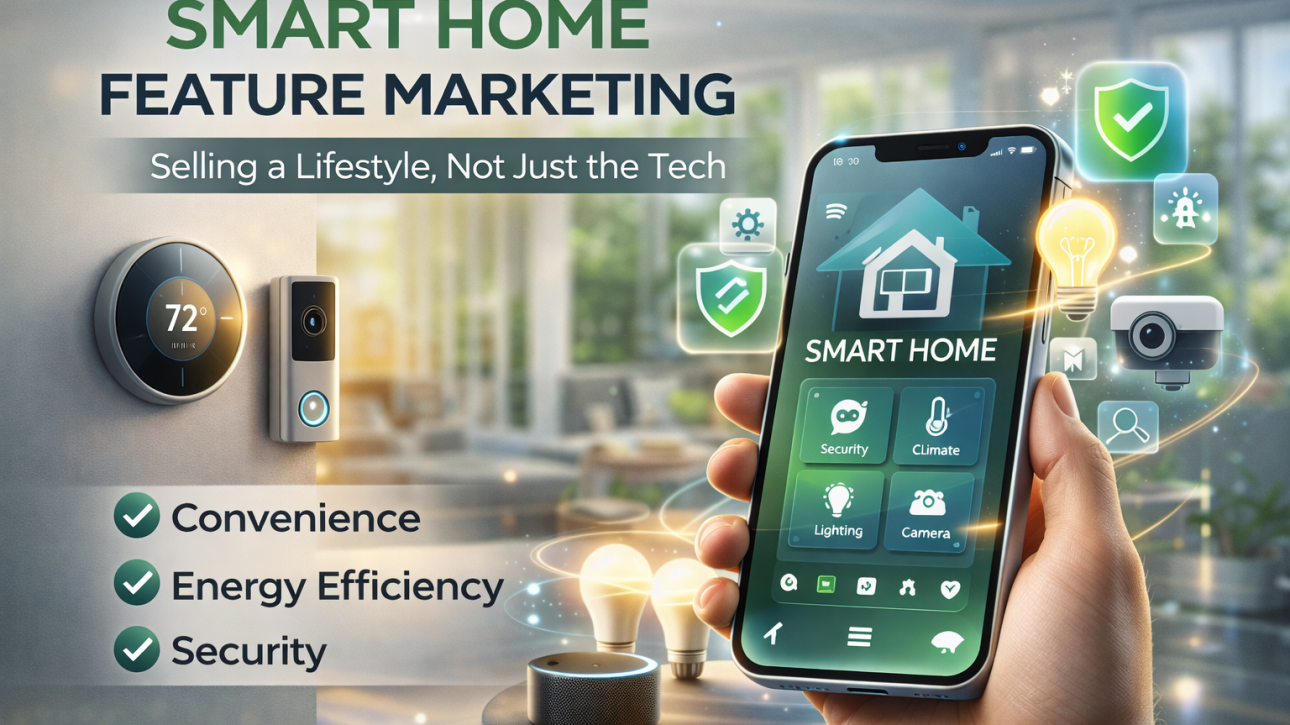
Smart homes aren’t the future anymore.
They’re here.
From voice-controlled lighting to app-connected security systems, buyers today are paying attention to technology built into the home. But here’s the catch:
Simply listing “smart thermostat” in the property description isn’t enough.
To truly capture attention, you have to market the lifestyle those features create noticeable convenience, comfort, security, and efficiency.
That’s where smart home feature marketing comes in.
What Counts as a Smart Home Feature?
Smart home technology includes systems that can be automated, remotely controlled, or connected through a central hub or mobile device.
Common features include:
- Smart thermostats
- Video doorbells
- Smart locks
- Automated lighting
- Integrated security systems
- Smart appliances
- Voice assistant integration
- Energy monitoring systems
- Motorized blinds
- Whole-home automation systems
Buyers may not always understand the technical details — but they absolutely understand convenience.
Stop Listing. Start Storytelling.
Instead of saying:
“Home includes smart lighting and security system.”
Try saying:
“Control your home’s lighting, security, and temperature from anywhere — whether you’re at work, on vacation, or relaxing on the couch.”
The difference? Emotion.
Smart home marketing should answer the question:
“How does this improve daily life?”
Highlight Convenience
Convenience is one of the strongest selling points.
Focus on scenarios like:
- Unlocking the door remotely for guests
- Adjusting the temperature before arriving home
- Turning off lights with a voice command
- Receiving security alerts instantly
- Automating morning and nighttime routines
When buyers picture themselves using the technology, its value becomes clear.
Emphasize Energy Efficiency
Many smart home features are designed to reduce energy use.
Marketing angles could include:
- Lower utility bills
- Automated temperature adjustments
- Smart irrigation systems
- Energy usage tracking
Eco-conscious buyers are often willing to pay more for efficiency.
Position smart features as both modern and responsible.
Security Sells
Safety is emotional.
Smart security features such as:
- Motion detection
- Smart cameras
- Real-time alerts
- Remote monitoring
…create peace of mind.
In marketing materials, emphasize how these systems protect families and property.
Security is not just a feature — it’s reassurance.
Demonstration Makes a Difference
Whenever possible, show the technology in action.
- Create short demo videos
- Include app screenshots in marketing materials
- Walk buyers through features during showings
- Share video clips of automation sequences
Seeing a door unlock or lights adjust in real time creates a stronger impression than simply reading about it.
Know Your Buyer Demographic
Not every buyer values the same features.
Tech-savvy millennials may prioritize:
- Voice assistants
- Smart appliances
- Integrated apps
Families may prioritize:
- Security systems
- Parental monitoring tools
Luxury buyers may expect:
- Full-home automation
- Custom lighting scenes
- Integrated entertainment systems
Tailor your marketing to your audience.
Avoid Overcomplicating It
Some buyers feel intimidated by advanced technology.
Keep messaging simple.
Instead of focusing on technical specs, focus on ease of use.
Emphasize:
- “User-friendly”
- “Easy to manage”
- “Seamlessly integrated”
- “App-controlled convenience”
Reassure buyers that smart doesn’t mean complicated.
Smart Homes and Property Value
Smart home features can increase perceived value — especially when they are:
- Professionally installed
- Fully integrated
- Well maintained
- Transferable to new owners
However, not all tech adds equal value. Marketing should focus on meaningful upgrades, not novelty gadgets.
Quality matters more than quantity.
The Future of Smart Home Marketing
As technology continues to evolve, smart features are becoming standard expectations rather than luxury add-ons.
Agents and sellers who effectively market these upgrades will stand out in competitive markets.
Buyers don’t just want a house.
They want a home that works for them.
Final Thoughts
Smart home feature marketing isn’t about impressing buyers with technology.
It’s about showing them how that technology makes life easier.
More comfort.
More control.
More security.
More efficiency.
When you shift from listing features to selling benefits, smart homes stop being “tech-heavy.”
They become lifestyle-ready.
And that’s what truly captures attention.