Let’s face it — empty rooms are hard to love.
When buyers walk into a vacant property, they often struggle to picture how the space could actually look and feel. Is the living room too small? Would a king-sized bed fit? Where would the couch go?
That’s where AI virtual staging steps in.
And no, it’s not just a trendy tech gimmick. It’s quickly becoming one of the most practical tools in modern real estate marketing.
What Is AI Virtual Staging?
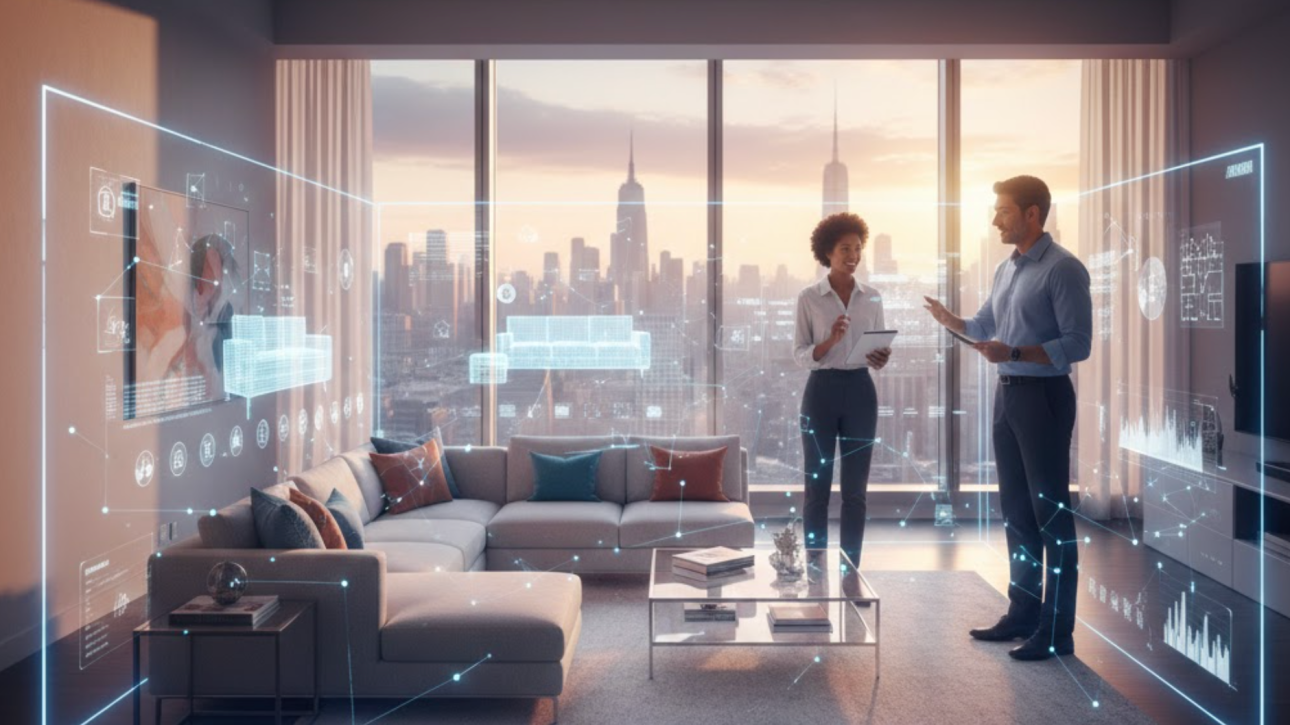
AI virtual staging uses artificial intelligence to digitally furnish and decorate empty rooms in listing photos.
Instead of physically moving furniture into a property (which can be expensive and time-consuming), AI tools:
- Add realistic furniture
- Adjust décor styles
- Enhance lighting
- Create different design themes
All digitally.
Within minutes, a blank room can look like a stylish, move-in-ready space.
Why It Works So Well
Real estate is emotional. Buyers don’t just evaluate square footage — they imagine their lives inside the home.
An empty space feels cold and abstract.
A staged space feels possible.
AI virtual staging helps buyers:
- Visualize layout and scale
- Understand how rooms function
- Connect emotionally to the space
And that emotional connection often leads to stronger interest.
Traditional Staging vs. AI Virtual Staging
Traditional staging absolutely works. But it comes with costs:
- Furniture rental
- Moving logistics
- Setup and removal fees
- Scheduling coordination
AI virtual staging, on the other hand:
- Costs a fraction of physical staging
- Requires no physical labor
- Can be done remotely
- Allows multiple design styles for the same room
You can even show a space as:
- Modern minimal
- Farmhouse cozy
- Luxury contemporary
- Family-friendly
All from the same original photo.
Speed Is a Major Advantage
In competitive markets, speed matters.
Instead of waiting days (or weeks) to stage a property, AI can produce furnished listing images quickly — helping agents launch listings faster.
That quicker turnaround can mean:
- Faster marketing
- More early attention
- Less time sitting on the market
The Transparency Factor
Here’s something important: honesty matters.
When using AI virtual staging, it’s essential to clearly label images as “virtually staged.”
Buyers appreciate transparency. The goal isn’t to mislead — it’s to help them visualize potential.
When done ethically, virtual staging enhances trust rather than harming it.
Where AI Virtual Staging Makes the Biggest Impact
It’s especially powerful for:
- Vacant homes
- New construction
- Investment properties
- Fixer-uppers
- Rental listings
Any space that lacks personality can benefit from digital enhancement.
Are There Downsides?
Like any tool, AI virtual staging isn’t perfect.
If overdone or unrealistic, it can:
- Set incorrect expectations
- Make rooms appear larger than they are
- Create disappointment during showings
The key is subtlety. The staging should reflect what’s realistically possible in the space.
The best virtual staging doesn’t scream “edited.” It simply feels natural.
The Future of Property Presentation
As AI tools continue improving, we’re seeing:
- More realistic rendering
- Better lighting adjustments
- Improved furniture scaling
- Faster processing times
And buyers are becoming more comfortable with digital presentation.
Just like online listings once felt “new,” virtual staging is quickly becoming normal.
Final Thoughts
AI virtual staging isn’t about replacing traditional staging completely. It’s about expanding options.
It gives agents and sellers:
- Flexibility
- Speed
- Cost efficiency
- Creative control
Most importantly, it helps buyers see what’s possible.
Because sometimes, all a house needs is a little imagination.
And AI just makes that imagination easier to see.