Let’s be honest — real estate marketing has come a long way from grainy photos and printed flyers.
Now we’re talking about immersive 3D walkthroughs, digital twins, and buyers touring homes from their couch at 10:30 PM in their pajamas. It sounds impressive. It looks impressive.
But here’s the real question agents and investors are asking:
Are virtual tours actually moving the needle… or are they just flashy tech?
Let’s break it down in plain English.
Buyers Expect More Than Photos Now
Consumer behavior has changed. Buyers are busier. Many are relocating from out of state. And almost everyone starts their search online.
A growing majority of buyers actively look for listings that include immersive virtual tours. That’s not just a preference — it’s becoming an expectation.
When someone can:
- Walk through the home room by room
- Understand the layout
- Visualize flow and space
- Measure proportions
They form a stronger emotional connection before ever stepping inside.
And emotion drives decisions.
Do Homes Actually Sell Faster?
Short answer: yes, in many cases.
Properties marketed with 3D tours consistently sell faster than those without. Why? Because buyers feel more confident. They’ve already “been inside” the home digitally. They’re not walking in cold.
That confidence shortens the decision cycle.
For sellers, that means:
- Fewer days on market
- Less stress
- Lower carrying costs
For agents, it means more efficient showings and more serious buyers walking through the door.
What About Selling for More?
Here’s where things get interesting.
Listings with immersive tours have been shown to command higher sale prices in certain markets. When buyers feel informed and emotionally connected, they’re less hesitant to make strong offers.
It also expands the buyer pool. Out-of-area buyers — even international ones — can seriously evaluate a property without traveling. That wider audience increases competition.
More competition = stronger offers.
Not All Virtual Tours Are Created Equal
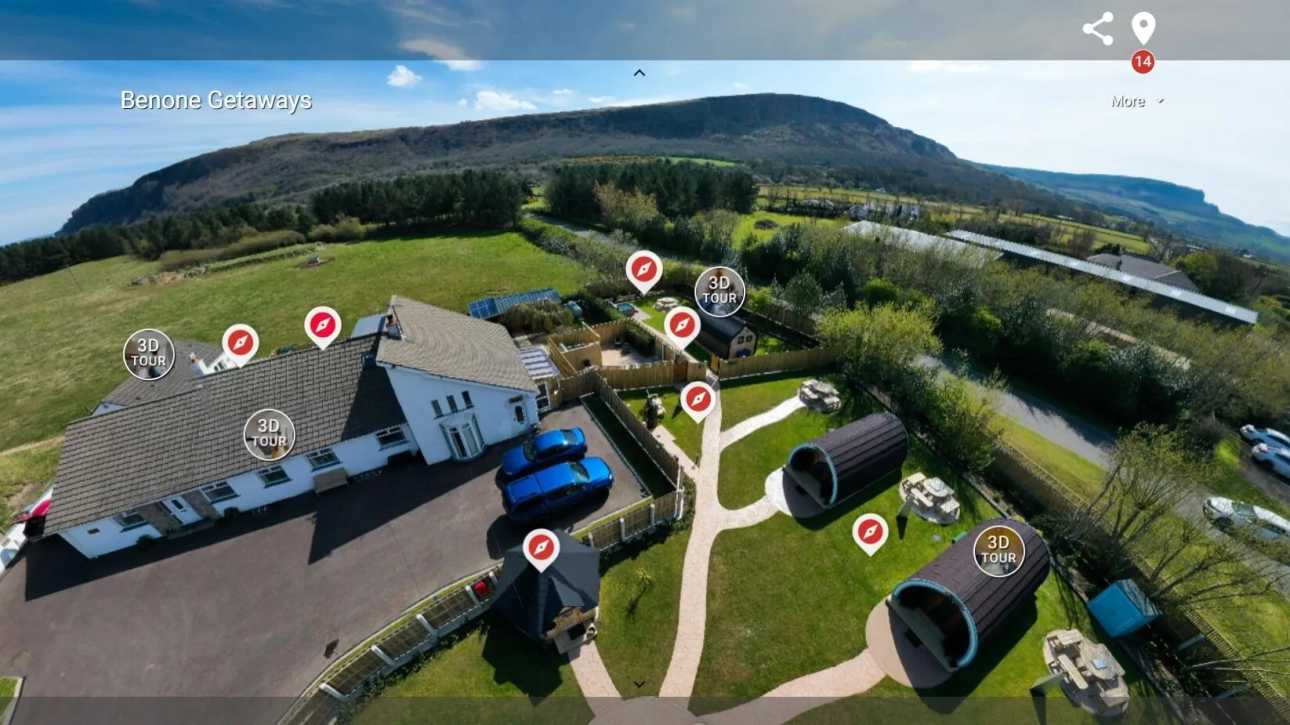
There’s a big difference between a simple 360° photo spin and a true 3D walkthrough.
A basic 360 tour lets you stand in one spot and look around.
A true 3D tour (often called a digital twin) allows buyers to:
- Move naturally through the space
- Understand layout and dimensions
- See how rooms connect
- Experience realistic depth
That deeper immersion is what creates real impact.
A Real-World Example: Rentals
In the rental world, virtual tours have produced measurable financial results.
Large property management groups that implemented both property-level and unit-level tours saw:
- Fewer vacancy days
- Higher effective rent
- Stronger overall revenue performance
Even shaving a few days off vacancy can mean tens of thousands of dollars annually at scale.
That’s not marketing fluff — that’s operational improvement.
So… Is It Worth the Cost?
Let’s talk money.
Professional 3D scans typically cost a few hundred dollars, depending on size and complexity. On the surface, that may feel like an extra expense.
But when you weigh that against:
- Selling weeks faster
- Potentially earning a higher sale price
- Reducing vacancy time
- Attracting better-qualified buyers
- Expanding your reach beyond your local market
The ROI often makes sense — especially for higher-end, unique, or competitive listings.
For luxury homes? It’s almost a necessity.
For investment properties? It improves operational efficiency.
For relocation markets? It’s a huge advantage.
When It Might Not Matter as Much
Are there scenarios where it barely moves the needle?
Yes.
In extremely hot markets where homes sell instantly regardless of marketing quality, the impact may be less dramatic. Entry-level properties with tight margins might not justify the cost every time.
But as markets normalize and buyers regain leverage, presentation becomes a differentiator again.
And differentiation wins listings.
The Bigger Picture
Virtual tours aren’t just about selling one property.
They position you as modern, transparent, and client-focused. Sellers notice that. Buyers notice that. Other agents notice that.
It signals:
- “I invest in my marketing.”
- “I leverage technology.”
- “I make it easy for buyers to engage.”
That brand perception compounds over time.
Final Verdict
Are virtual tours and 3D walkthroughs a magic bullet?
No.
Are they a powerful competitive advantage in most markets?
Absolutely.
They increase engagement.
They build confidence.
They expand reach.
They often speed up sales.
In a digital-first world where buyers expect convenience and clarity, immersive tours aren’t just a cool add-on anymore.
They’re quickly becoming standard.
And the agents who embrace them now won’t just keep up — they’ll stand out.