Let’s talk about something most agents and investors avoid… but absolutely shouldn’t ignore.
Divorce leads.
When a divorce is filed, real estate is often involved. Homes get sold. Equity gets split. Decisions have to be made. For real estate professionals, that can mean opportunity — if you approach it professionally and respectfully.
The key isn’t just finding divorce filings.
The key is building a system that consistently pulls the data, enriches it, filters the right opportunities, and automatically starts thoughtful outreach.
Here’s how to do it — without manually digging through court records every week.
Step 1: Getting Divorce Filing Data
Divorce filings are public record. The problem is access and timing.
You can go county by county and pull records manually. But that’s slow, inconsistent, and hard to scale.
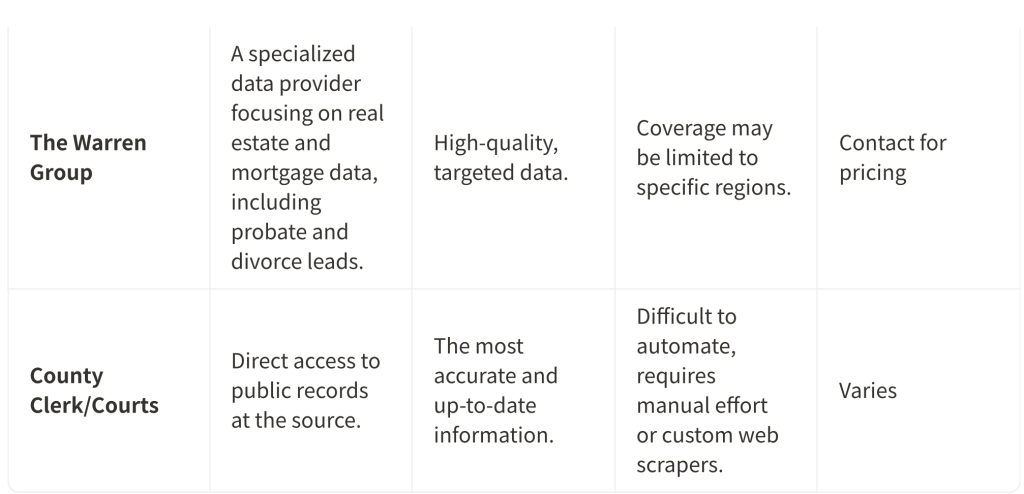
The better approach is using structured data providers.
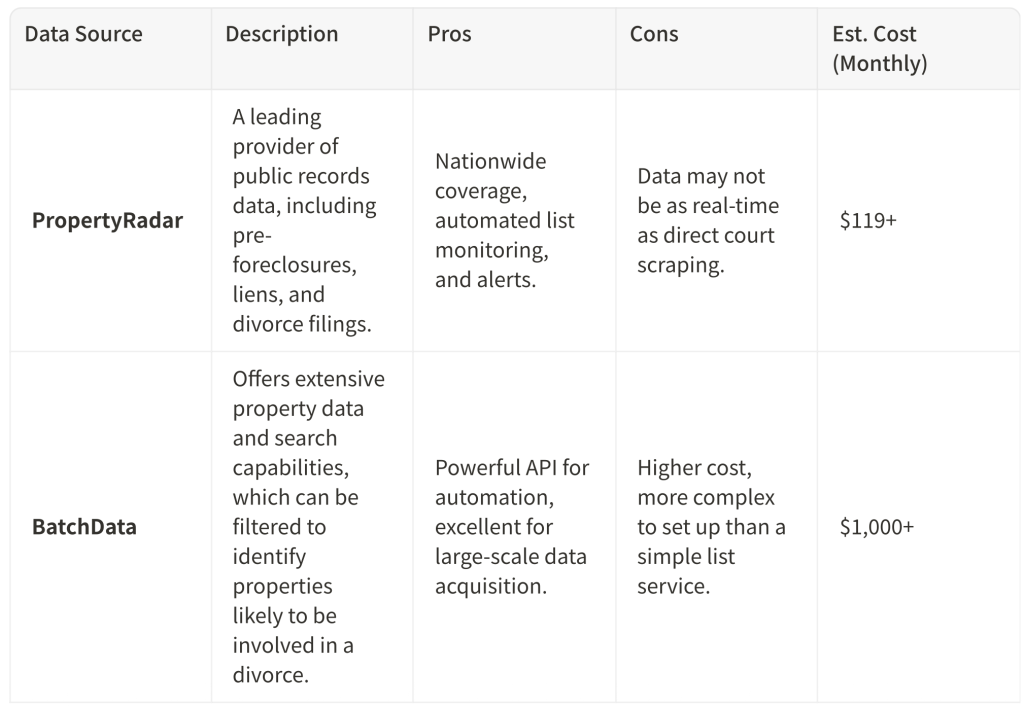
Two common options in the real estate space are:
- PropertyRadar – Easy to use, good coverage, and friendly for non-technical users.
- BatchData – More powerful, API-driven, and better suited for automation-heavy workflows.
If you want simplicity, PropertyRadar is often the easiest starting point.
If you want scale and automation, BatchData tends to be the stronger choice — especially when you’re planning to connect everything into a larger tech stack.
Step 2: Enriching the Data (Skip Tracing)
Once you have a list of divorce filings tied to properties, you still don’t have what you actually need:
Phone numbers.
Emails.
Updated ownership info.
That’s where skip tracing comes in.
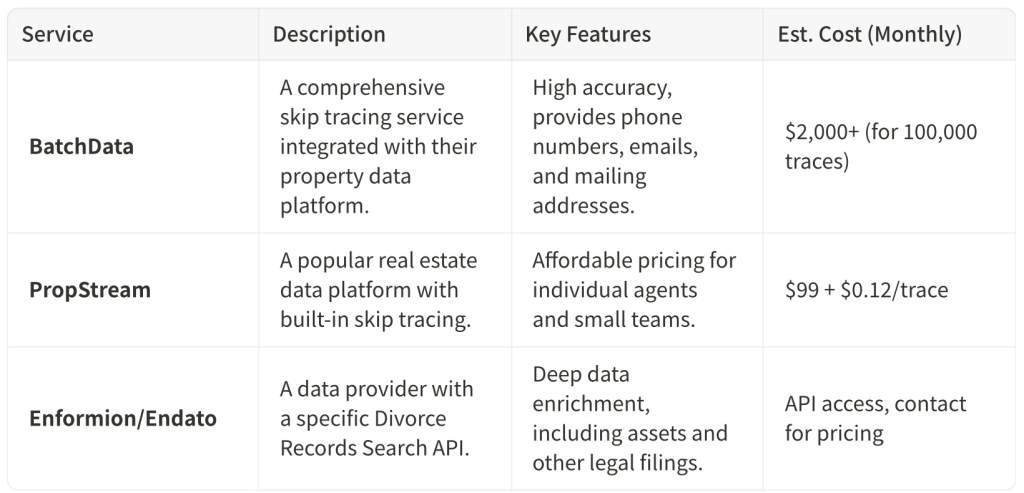
High-volume investors often use BatchData’s skip tracing because:
- It’s API-accessible
- It’s built for automation
- It handles bulk processing efficiently
At this stage, your raw court record turns into a contactable homeowner.
And that’s where real opportunity begins.
Step 3: Automating Everything with n8n + GoHighLevel
Now let’s connect the dots.
Instead of manually exporting lists, uploading CSV files, and texting people one by one, you can automate the entire pipeline using:
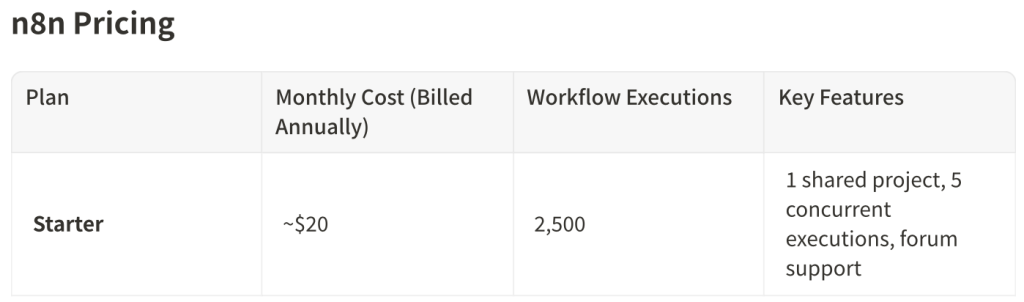
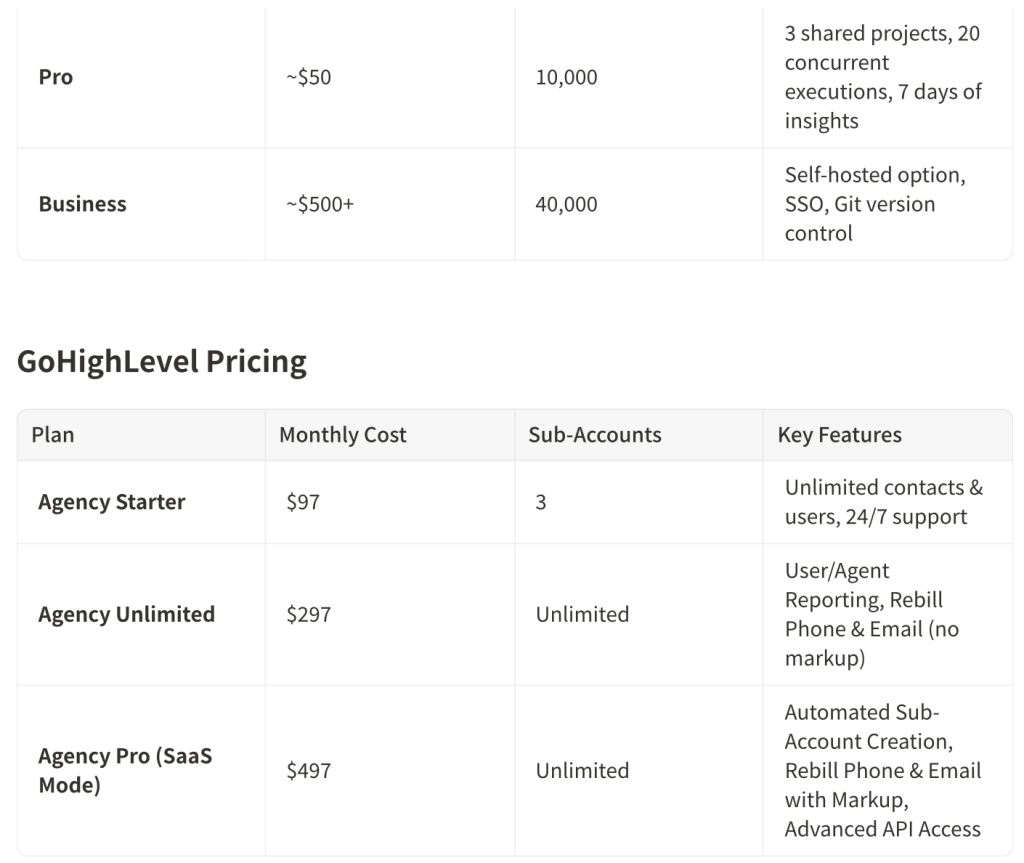
- n8n as the automation engine
- GoHighLevel as the CRM and outreach system
Think of n8n as the “brain” and GoHighLevel as the “sales machine.”
What the Workflow Looks Like
Here’s a simple breakdown of how it runs:
1. Trigger
The automation starts daily (or via webhook) when new divorce filings become available.
2. Pull the Data
n8n calls the API from PropertyRadar or BatchData and grabs new filings.
3. Skip Trace
For each filing, n8n automatically sends the record to BatchData for contact enrichment.
4. Filter & Score
You don’t want every lead.
n8n can filter by:
- Property equity
- Zip code
- Property value
- Length of ownership
This step ensures you focus only on qualified, high-potential sellers.
5. Push to CRM
Qualified leads are automatically created as contacts inside GoHighLevel.
They can be:
- Tagged as “Divorce Lead”
- Assigned to a specific sales rep
- Dropped into a pipeline stage
6. Trigger Outreach Campaign
Inside GoHighLevel, a workflow activates immediately when the tag is applied.
That workflow can include:
- Automated SMS
- Email follow-up
- Voicemail drops
- Task reminders for your acquisitions team
- Long-term nurture sequences
Now you have speed-to-lead handled automatically.
What Does It Cost?
Your monthly costs will depend on:
- Data provider subscription
- Skip tracing volume
- Hosting (if self-hosting n8n)
- GoHighLevel subscription
- SMS and email usage
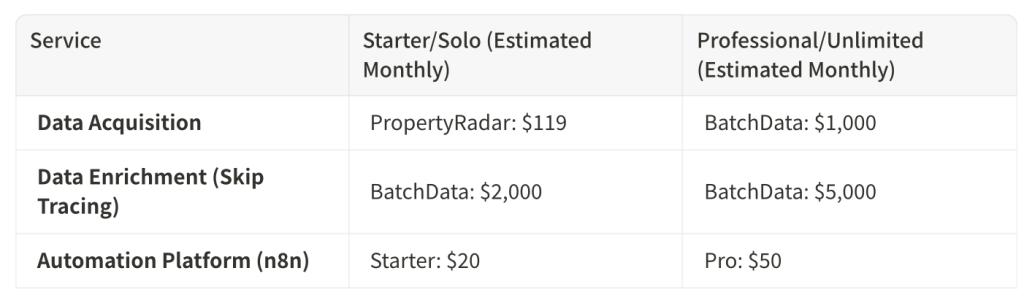

For most real estate operators in 2026, a fully automated system like this ranges from a few hundred to over a thousand dollars per month depending on lead volume.
But compare that to:
- Missing deals
- Paying staff to manually pull data
- Responding days late
Automation tends to pay for itself quickly — especially in competitive markets.
Why This Works So Well
Divorce situations are time-sensitive.
When you can:
- Identify filings quickly
- Enrich contact info instantly
- Reach out professionally within 24–48 hours
You dramatically increase your chances of having the conversation before other investors or agents even know the opportunity exists.
The advantage isn’t just data.
It’s timing.
Final Thoughts
Automating divorce data for real estate lead generation isn’t about being aggressive.
It’s about being prepared.
By combining:
- Reliable data sources
- Skip tracing
- n8n for workflow automation
- GoHighLevel for outreach and pipeline management
You create a system that runs in the background — identifying, qualifying, and engaging potential sellers automatically.
Yes, the setup requires some technical effort.
But once it’s live?
You’re no longer chasing lists.
You’re running a machine.