Geofencing for Real Estate Ads: What You Need to Know (And How to Actually Do It)
If you’ve ever walked past a competitor’s open house and immediately started seeing their ads on your phone, you’ve experienced geofencing firsthand. It sounds almost creepy when you first hear about it, but for real estate professionals, it’s one of the most powerful tools available right now — and it’s only getting more accessible.
Let me break down what geofencing actually is, how to automate it, and what you absolutely cannot afford to ignore when running these campaigns.
So What Even Is Geofencing?
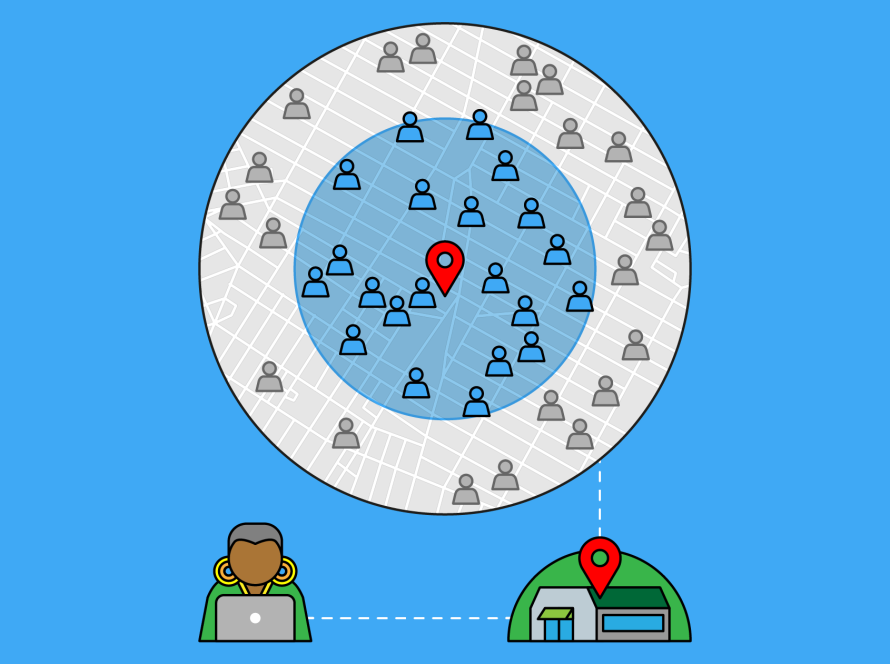
Think of it like drawing an invisible fence on a map. When someone’s phone crosses into that boundary, they become eligible to see your ads. Simple as that. The technology pulls from GPS and Wi-Fi data, so it works whether someone is actively searching for homes or just grabbing coffee in a neighborhood you’re targeting.
For real estate, this opens up some genuinely clever possibilities. You can put a geofence around a competitor’s office and show up right when their potential clients are walking out the door. You can set up a temporary fence around your open house so anyone within a few blocks gets a reminder. You can even target the gym or coffee shop that the type of buyer you’re after tends to frequent. Done right, it feels less like advertising and more like being in exactly the right place at exactly the right time.
The Tools That Actually Make This Work
You don’t need to build any of this from scratch. A few platforms do the heavy lifting.
Radar.io is probably the most developer-friendly option out there. It lets you create thousands of geofences programmatically — circles, polygons, custom shapes — and it fires real-time events when users enter or exit. Those events are what you plug into the rest of your marketing stack.
GroundTruth is more of an all-in-one advertising platform. It’s built specifically for location-based mobile ad campaigns, so if you’d rather not stitch together multiple tools, it handles a lot of the complexity for you.
Zapier acts as the connective tissue between everything. Once Radar or another platform detects that someone entered your geofence, Zapier can automatically push that event to your CRM, trigger an email sequence, or notify your sales team. No code required.
Worth noting: Google Ads and Meta are more limited for real estate specifically, and there’s a very important reason for that — which we’ll get to in a moment.
Building a Workflow That Runs Itself
The real power of geofencing isn’t just the targeting — it’s the automation. A solid setup looks something like this:
When a new listing goes into your CRM, it automatically triggers geofences around the property, nearby competitor listings, and local hotspots. Someone walks through that zone, sees your ad, clicks it, and their info flows right back into your CRM where a lead nurturing sequence kicks off. You’re barely touching it after the initial setup.
Dynamic ad content takes this even further. Imagine someone who regularly visits a neighborhood suddenly seeing ads for your listings in that exact area, with details about local schools or restaurants baked into the creative. That level of relevance is what gets people to actually pay attention.
The Part You Cannot Skip: Fair Housing Compliance
Here’s where I want to be direct with you, because this is genuinely important and not something to skim past.
The Fair Housing Act exists to prevent discrimination in housing based on race, color, religion, sex, disability, familial status, and national origin. Geofencing doesn’t automatically make you compliant or non-compliant — it’s all about how you use it.
The danger zone is when geofencing starts acting as a proxy for demographic targeting. If your geofences are drawn in ways that effectively keep certain protected groups from seeing your ads, you’re in serious legal trouble, even if that wasn’t your intent. This is exactly why Google and Meta have pulled back on granular location targeting for housing ads — they’ve been burned by this before, and so have the advertisers using their platforms.
The safe approach is straightforward in principle: geofence around properties, points of interest, and neighborhoods broadly — not in ways that carve out or exclude specific communities. Make your boundaries generous enough to capture a genuinely diverse audience. And honestly, consult a lawyer before you launch anything ambitious. The fine for a Fair Housing violation isn’t worth the campaign.
Is It Worth It?
For most real estate professionals, yes. The combination of hyper-local targeting, automation, and real-time engagement is hard to replicate with traditional advertising. You’re not blasting your listing to an entire city and hoping — you’re reaching people who are physically present in the places that matter.
The learning curve is real, and the compliance piece requires genuine attention. But once you have a workflow humming along, it’s one of those tools that genuinely makes you feel like you’re playing at a different level than the competition.
Start small — one geofence around your next open house — and see how it feels before scaling up. You might be surprised how quickly it clicks.